
Does Car Insurance Cover Fire Damage?
Yes, car insurance can cover fire damage, but it depends on what caused the fire and the coverage included in your policy. Comprehensive coverage typically covers fires that aren't caused by a collision, while collision coverage may apply if your car catches fire as a direct result of an accident.
Liability insurance generally won't pay for fire damage to your own vehicle.
If a fire damages or destroys your car, the key questions are what caused the fire, which coverage applies, and whether the vehicle can be repaired or is considered a total loss.
Key Takeaways
- Comprehensive coverage typically covers car fires caused by events other than collisions, including wildfires, arson, and certain accidental fires.
- Collision coverage may cover fire damage if your vehicle catches fire as a direct result of a crash.
- Liability-only insurance generally doesn't cover fire damage to your own vehicle.
- If your car is declared a total loss after a covered fire, the settlement is generally based on its value before the loss, minus the applicable deductible.
What Types of Car Fires Does Insurance Cover?
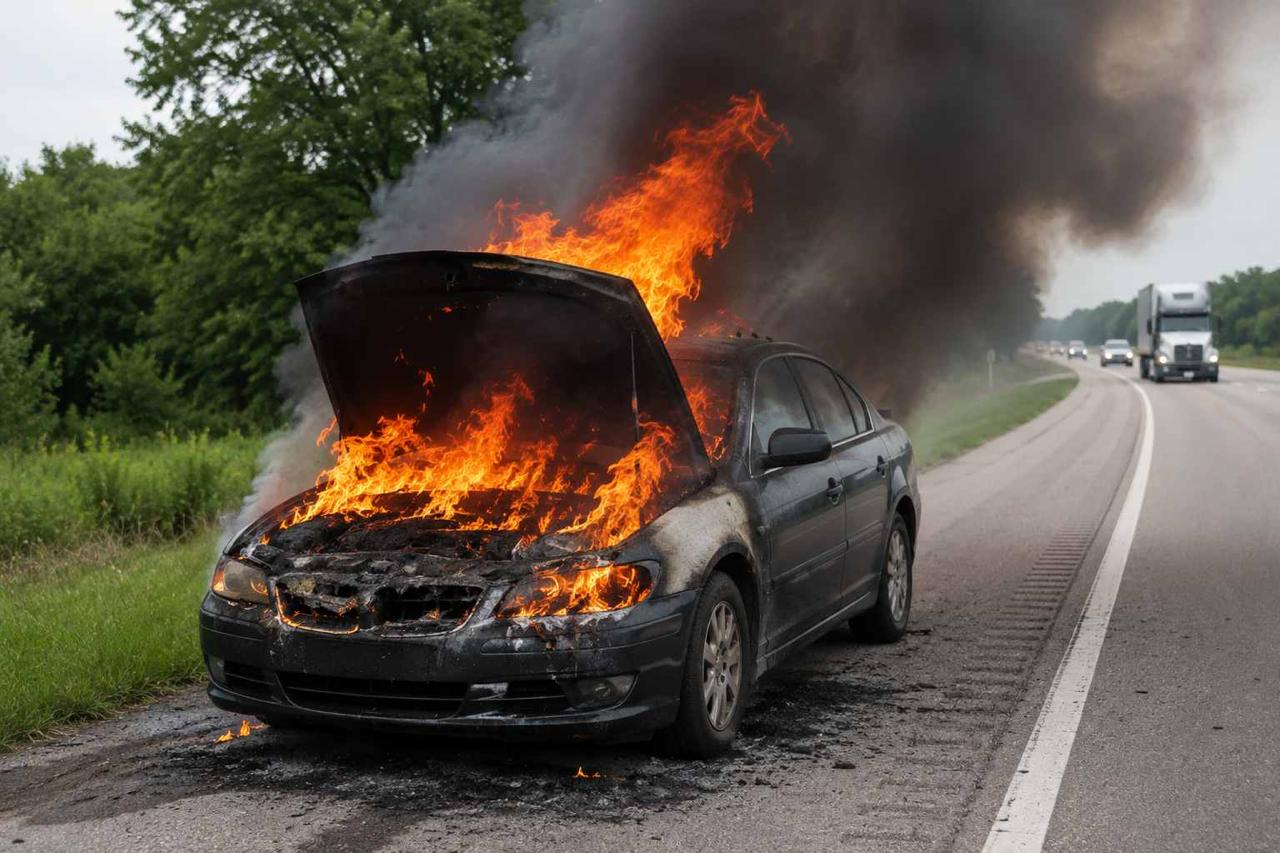
The cause of the fire usually determines which part of an auto insurance policy may apply.
| Cause of Fire | Usually Covered? | Coverage That May Apply | Important Conditions |
|---|---|---|---|
| Engine or mechanical fire | Depends | Comprehensive | Resulting fire damage may be treated differently from the failed component itself |
| Electrical fire | Often, depending on cause | Comprehensive | Policy exclusions and the cause of the electrical problem matter |
| EV battery fire | Depends | Comprehensive | Coverage depends on how and why the battery caught fire |
| Wildfire | Usually | Comprehensive | Comprehensive commonly covers fire and many natural events |
| Lightning | Usually | Comprehensive | Lightning and resulting fire damage are generally non-collision events |
| Arson by another person | Usually | Comprehensive | A police report and investigation may be required |
| House or garage fire | Usually | Comprehensive | The vehicle generally falls under auto insurance rather than homeowners insurance |
| Fire caused by a collision | May be covered | Collision | Coverage depends on the circumstances of the accident |
| Fire after an accident caused by another driver | May be covered | Other driver's liability / Collision | Depends on fault, available insurance, and your policy |
| Accidental owner-caused fire | Depends | Comprehensive | Circumstances and policy exclusions matter |
| Intentional fire by the policyholder | No | — | Intentional damage and insurance fraud aren't covered |
These are general examples. Actual coverage depends on your insurer, policy, state, and the circumstances of the loss.
Does Comprehensive Insurance Cover Fire Damage?
Comprehensive coverage typically covers fire damage that isn't caused by a collision.
Depending on the circumstances and policy, this can include:
- accidental fires;
- wildfires and other natural events;
- arson and vandalism;
- lightning;
- explosions;
- certain engine or electrical fires.
Comprehensive coverage is generally optional under state insurance laws. However, if you finance or lease your vehicle, your lender or leasing company may require you to carry it.
A comprehensive deductible typically applies to a covered claim.
Check your declarations page and policy terms to confirm your coverage and deductible.
Want protection from fire, theft, and other non-collision risks? Compare auto insurance options that include comprehensive coverage.
Compare Auto Insurance OptionsWhat If Your Car Catches Fire After an Accident?
Not every vehicle fire falls under comprehensive coverage.
Suppose your vehicle collides with another car, damages the fuel system, and catches fire as a direct result. Because the fire resulted from the collision, collision coverage may apply.
If another driver caused the accident, their property damage liability coverage may also apply, subject to fault, coverage limits, and state rules.
Depending on the situation, you may also be able to make a claim through your own collision coverage while your insurer seeks recovery from the at-fault driver's insurance.
The important distinction is the cause of the loss, not simply the fact that fire damaged the vehicle.
Does Car Insurance Cover Engine, Electrical, or Mechanical Fires?
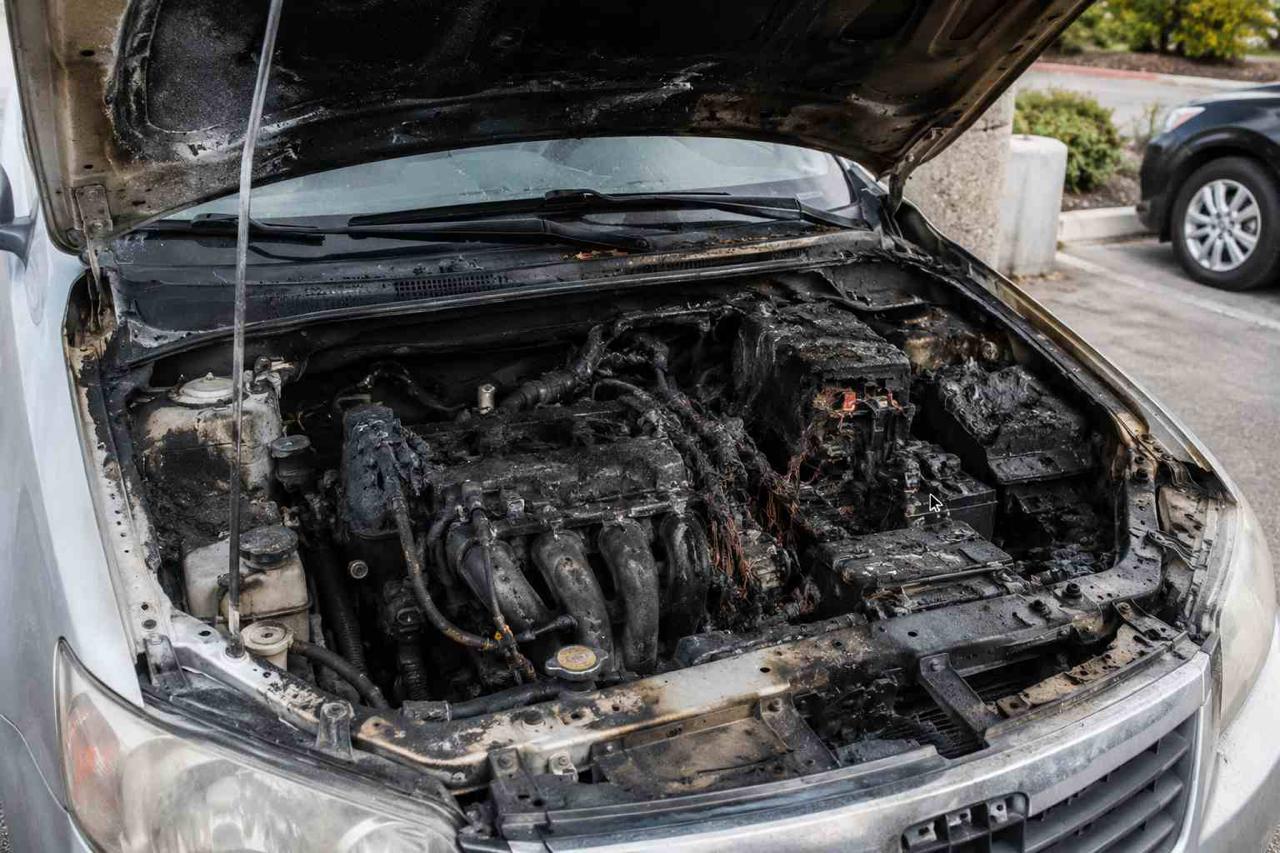
Engine and electrical problems can cause vehicle fires, but there's an important distinction between the component that failed and the resulting fire damage.
Comprehensive insurance may cover resulting fire damage while not paying to repair or replace the mechanical or electrical component that failed because of ordinary wear and tear or mechanical breakdown.
For example, an electrical component could fail and start a fire that damages the engine compartment. The resulting fire damage may qualify for coverage even if replacing the original failed component itself doesn't.
The same principle can apply to fires involving fuel leaks, overheating, electrical short circuits, or other mechanical problems.
Insurers typically investigate how the fire started before determining which damage falls within the policy.
Does Car Insurance Cover EV Battery Fires?
Electric vehicle fires generally follow the same basic insurance principle: the cause of the loss matters.
An EV battery can catch fire because of an electrical fault, battery malfunction, collision damage, or another event.
A non-collision battery fire may fall under comprehensive coverage, while a battery fire resulting directly from an accident may be handled under collision coverage.
A manufacturing defect can make the situation more complicated. A manufacturer's warranty or another remedy may apply to the defective battery or component itself, while resulting vehicle damage is evaluated separately under the auto insurance policy.
Because EV batteries can be expensive to repair or replace, severe battery fires may also result in the vehicle being declared a total loss.
Does Car Insurance Cover Wildfire Damage?
Comprehensive insurance typically covers vehicle damage caused by wildfires because wildfire is a non-collision event.
Depending on the circumstances and policy terms, coverage may apply to damage caused by flames as well as related heat, smoke, or ash.
For example, if your parked vehicle is destroyed when a wildfire reaches your neighborhood, you would generally look to comprehensive coverage rather than collision coverage.
Drivers in areas with significant wildfire risk should check whether their policies include comprehensive coverage and review the applicable deductible.
Does Car Insurance Cover Arson?
If another person intentionally sets your vehicle on fire, comprehensive insurance may cover the damage.
Your insurer may investigate the cause of the fire before approving the claim. Documentation such as a police report, fire department report, photos, video, and witness information can help establish what happened.
The situation is very different if the policyholder intentionally sets fire to their own vehicle. Insurance doesn't cover deliberate damage committed to obtain a payout, and insurance fraud can have serious legal consequences.
What If Your Car Is Damaged in a House or Garage Fire?
If a fire starts in your home or garage and spreads to your vehicle, the damage to the car would generally fall under auto insurance, with comprehensive coverage potentially applying.
Homeowners insurance typically isn't a substitute for comprehensive auto coverage simply because the vehicle happened to be parked in your garage.
Different policies may apply to different losses from the same fire:
- homeowners insurance may cover qualifying damage to the house;
- comprehensive auto coverage may cover the vehicle;
- homeowners or renters insurance may cover certain personal belongings.
Each policy has its own coverage limits, deductibles, terms, and exclusions.
What Fire Damage Is Not Covered by Car Insurance?
Fire damage isn't automatically covered in every situation.
Liability coverage generally doesn't pay for damage to your own vehicle. Without comprehensive or applicable collision coverage, you may have to pay for the loss yourself.
A policyholder can't deliberately destroy a vehicle and make a legitimate claim for the loss.
Auto policies contain specific exclusions, and a claim can be denied if the circumstances fall under one of them.
Comprehensive insurance isn't a vehicle warranty. A failed engine, electrical component, or other mechanical part isn't automatically covered simply because it could potentially cause a fire.
The insurer will review both the cause of the loss and the terms of the policy before making a coverage decision.
Does Car Insurance Cover Personal Belongings Damaged in a Car Fire?
Comprehensive auto insurance primarily protects the vehicle, not ordinary personal belongings kept inside it.
For example, standard auto insurance generally doesn't cover items such as:
- laptops;
- smartphones;
- clothing;
- luggage;
- cameras.
However, homeowners or renters insurance may provide coverage for personal property away from home, subject to the applicable policy terms, limits, and deductible.
Permanently installed equipment and custom vehicle modifications may be treated differently. If your vehicle has expensive aftermarket equipment, check whether your standard auto policy covers it or whether additional coverage is necessary.
How Much Does Insurance Pay for Car Fire Damage?
The amount an insurer may pay depends largely on whether the vehicle can be repaired or is considered a total loss.
If Your Car Can Be Repaired
The insurer will typically inspect the vehicle and estimate the cost of covered repairs.
If repairing the car is economically reasonable, the insurer may pay for covered repairs minus the applicable deductible.
Fire can damage wiring, electronics, interior materials, paint, mechanical components, and structural parts. Because some damage isn't immediately visible, a vehicle may require a detailed inspection before the full repair cost can be determined.
If Your Car Is a Total Loss
A severe fire may result in the vehicle being declared a total loss.
Generally, this happens when repairing the vehicle isn't economically reasonable relative to its value, although total-loss rules vary by state.
For a covered total loss, the insurer generally determines the vehicle's value immediately before the fire. Factors may include:
- make and model;
- model year;
- mileage;
- condition;
- trim and options;
- comparable vehicles in the local market.
The applicable deductible is generally subtracted from the settlement. For example:
The actual settlement may differ depending on the policy, valuation method, taxes, fees, state law, and other factors.
If you disagree with the insurer's valuation, ask how the value was calculated and what documentation can be submitted for reconsideration.
What If a Financed or Leased Car Is Destroyed by Fire?
A fire doesn't automatically eliminate your auto loan or lease.
If a financed vehicle is declared a total loss, the insurance payment may go to the lender first because the lender has a financial interest in the vehicle.
The insurance settlement can also be lower than the remaining balance on your loan. For example:
Depending on your agreement, you may remain responsible for that difference.
This is where GAP insurance may help. GAP coverage is designed to cover some or all of the difference between the amount owed on an eligible auto loan and the primary insurer's settlement after a covered total loss, subject to its own terms and exclusions.
Drivers who finance or lease a vehicle may also be required by their lender or leasing company to maintain comprehensive and collision coverage.
Financing or leasing a vehicle? Make sure you have the coverage needed to protect your car and your financial investment.
Explore Auto Insurance CoverageWhat Should You Do If Your Car Catches Fire?
Your safety comes first. If your vehicle is burning:
- Get yourself and your passengers away from the vehicle.
- Call emergency services.
- Don't return to or approach the burning vehicle to retrieve belongings.
- Once authorities say it's safe, document the vehicle and surrounding area with photos or video.
- Obtain the police or fire department report if one is available.
Don't attempt to inspect serious fire damage yourself while the vehicle remains unsafe.
How to File a Car Fire Insurance Claim
Once the immediate danger has passed, start the insurance claim process as soon as reasonably possible.
- 1Notify your insurer
Provide the date, location, circumstances of the fire, policy information, and vehicle details.
- 2Submit documentation
Your insurer may request photos, videos, police or fire reports, towing records, and other evidence.
- 3Cooperate with the investigation
Because the cause of the fire can determine which coverage applies, the insurer may investigate how the fire started.
- 4Have the damage evaluated
An adjuster will assess the damage and determine whether the vehicle can be repaired or should be considered a total loss.
- 5Review the claim decision
If the loss is covered, the insurer may approve repairs or calculate a total-loss settlement.
- 6Receive the settlement
The final payment will depend on the covered loss, deductible, vehicle value, and other applicable policy terms.
Keep relevant receipts for towing, storage, or other expenses and ask your insurer whether they are reimbursable under your coverage.
For a more detailed explanation, see our guide to Navigating the Auto Insurance Claim Process in the USA.
Why Could a Car Fire Insurance Claim Be Denied?
A car fire insurance claim may be denied if:
- your policy doesn't include coverage applicable to the loss;
- the circumstances fall under a policy exclusion;
- the damage was intentionally caused by the policyholder;
- the insurer determines that the claimed damage didn't result from a covered event;
- the available evidence doesn't support the claim.
A denied claim doesn't mean that all vehicle fires are excluded from your policy. Coverage decisions depend on the circumstances of the individual loss and the policy language.
If your claim is denied, ask the insurer for the reason in writing and review the relevant provisions of your policy.
Does a Fire Claim Affect Your Car Insurance Premium?
A fire claim may affect your future car insurance premium, but there is no universal rule.
Insurers may consider factors such as your claims history, location, vehicle, coverage, and applicable state insurance rules when determining rates.
Even when the fire wasn't your fault, that doesn't necessarily guarantee your premium will remain unchanged.
If your rate changes after a claim, comparing quotes from multiple insurers can help you evaluate other available options.
Has your car insurance rate changed after a claim? Compare quotes to find coverage that better fits your needs and budget.
Compare Car Insurance QuotesHow to Reduce the Risk of a Car Fire
Regular vehicle maintenance can help reduce the risk of a fire. Pay attention to warning signs such as:
- fuel or oil leaks;
- damaged wiring;
- repeatedly blown fuses;
- unusual burning or fuel odors;
- overheating;
- electrical or battery problems.
You should also check for manufacturer safety recalls and address them promptly.
If you notice signs of a fuel, electrical, cooling, or battery problem, have the vehicle inspected rather than continuing to drive it.
Frequently Asked Questions
It depends on how the fire occurred and the terms of your policy. An accidental fire may be treated differently from intentional damage or a loss that falls under a policy exclusion. The insurer will evaluate the circumstances before making a coverage decision.
Comprehensive coverage may cover vehicle damage caused by fireworks when the incident qualifies as a covered non-collision loss. Policy terms and exclusions still apply.
Comprehensive coverage typically covers non-collision events such as lightning and resulting fire damage, subject to the terms of the policy.
There is no universal timeline. The process can depend on the severity of the damage, whether the cause requires investigation, the availability of documentation, and whether the vehicle can be repaired or is a total loss.
Possibly. The rules depend on your insurer and state. Keeping a totaled vehicle may reduce your settlement, and the vehicle may receive a salvage title. Ask your insurer about the requirements before deciding to retain it.
It depends on your policy and the circumstances of the claim. Keep your towing receipt and ask your insurer whether the expense is covered or reimbursable.
You may be able to get a rental vehicle if your policy includes applicable rental reimbursement coverage or another responsible insurer agrees to cover the expense. Comprehensive coverage by itself doesn't necessarily include a rental car.
Get the Right Auto Insurance Coverage
A car fire can cause extensive damage or destroy a vehicle completely. Liability insurance alone generally won't protect your own car from this type of loss, which is why understanding comprehensive and collision coverage matters.
51 State Insurance can help you compare auto insurance options and choose coverage based on your vehicle, budget, and insurance needs.
Get an Auto Insurance QuoteCoverage availability, limits, deductibles, exclusions, and claim decisions vary by insurer, policy, and state. Review your policy documents to understand the coverage that applies to you.