
Does Homeowners Insurance Cover Water Damage?
Homeowners insurance typically covers sudden and accidental water damage caused by a covered event, such as a burst pipe, an appliance that unexpectedly leaks, or rain entering through a roof damaged by a storm.
However, not all water damage is covered. Gradual leaks, poor maintenance, normal wear and tear, and flooding are generally excluded from standard homeowners insurance. Sewer backups and sump pump failures may also require additional coverage.
The key question isn't simply whether water damaged your home. It's where the water came from, why the damage happened, and whether the cause is covered by your policy.
Key Takeaways
- Homeowners insurance typically covers water damage that is sudden and accidental, such as damage from a burst pipe or unexpected appliance leak.
- Damage caused by gradual leaks, neglect, or normal wear and tear is generally not covered.
- Standard homeowners insurance doesn't cover flooding; separate flood insurance is generally required.
- Sewer backups and sump pump failures may require optional water backup or similar coverage.
- Even when resulting water damage is covered, the policy may not pay to repair or replace the appliance, pipe, or other item that caused the problem.
When Does Homeowners Insurance Cover Water Damage?
Homeowners insurance may cover water damage when it is caused by a sudden and accidental event.
A standard homeowners policy generally covers accidental discharge or overflow of water from plumbing, heating, air-conditioning systems, fire-protective sprinkler systems, or household appliances when the event meets the policy's requirements.
For example, imagine a pipe suddenly bursts inside a wall and water damages the drywall, flooring, and furniture. Those resulting losses may be covered.
Now imagine a pipe has been slowly leaking under a sink for months because it was never repaired. Damage caused by the ongoing leak may be excluded because homeowners insurance isn't designed to pay for routine maintenance or preventable deterioration.
This distinction — sudden and accidental vs. gradual and preventable — is one of the most important concepts to understand when evaluating a water damage claim.
What Types of Water Damage Does Homeowners Insurance Cover?
The same amount of water can lead to completely different insurance outcomes depending on where it came from.
These are general examples rather than guarantees. Policy language, exclusions, endorsements, limits, and state requirements can affect whether a specific loss is covered.
Does Homeowners Insurance Cover Burst or Frozen Pipes?
Homeowners insurance typically covers resulting water damage when a pipe suddenly bursts. For example, if a pipe breaks behind a wall, your policy may help pay for covered damage to flooring, drywall, cabinets, and furniture.
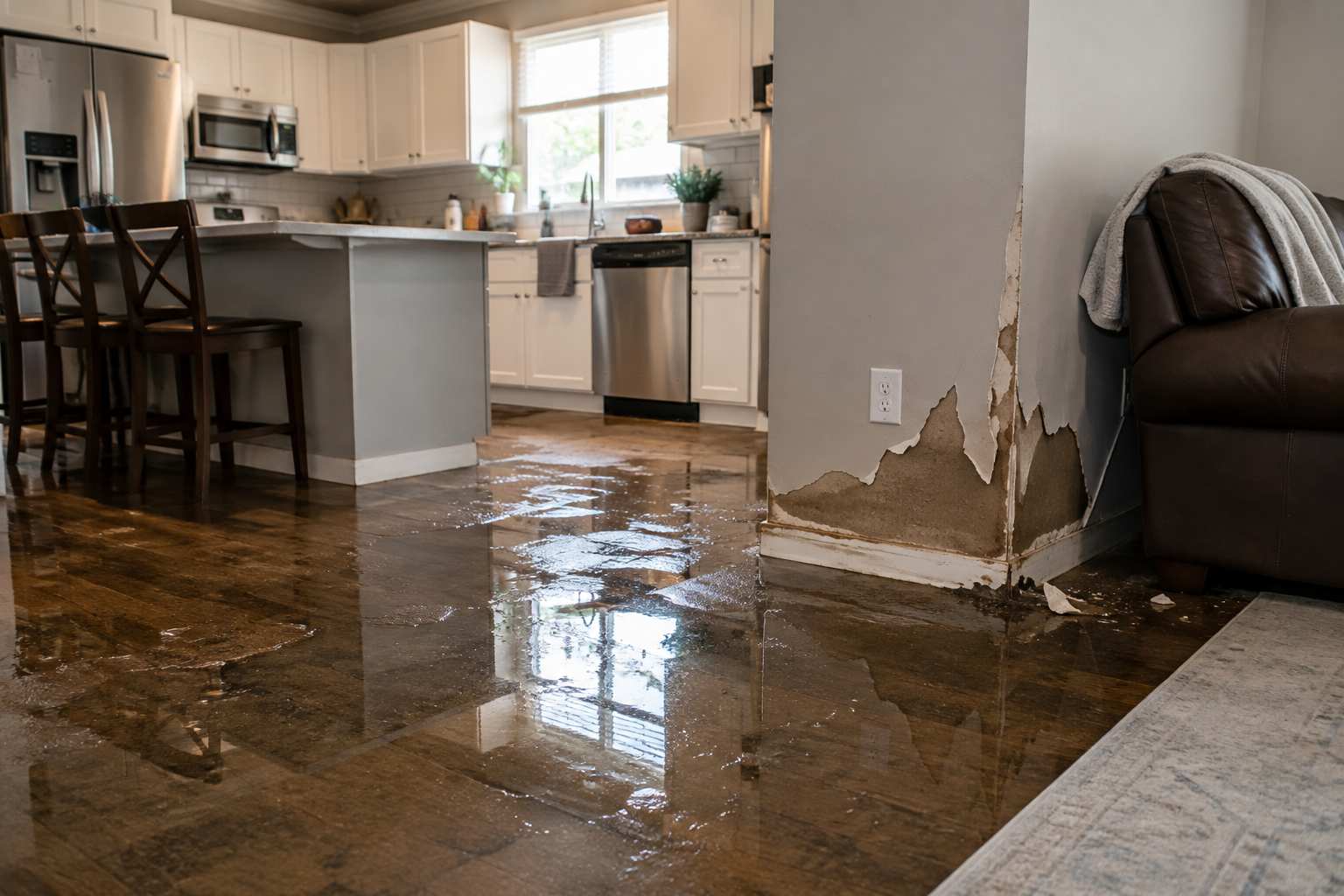
A sudden pipe leak can cause water damage to floors, walls, and other property. Source: AI-generated image
Frozen pipes can also be covered, but additional conditions may apply.
Homeowners are generally expected to take reasonable steps to protect the property. If you leave your home during freezing weather without maintaining adequate heat or otherwise fail to take reasonable precautions, coverage for a frozen-pipe loss may be limited or excluded depending on the policy.
If you discover a frozen or burst pipe, shutting off the water quickly can also help prevent additional damage. Triple-I notes that standard homeowners policies generally cover many losses resulting from freezing, including water damage from pipes that freeze and burst.
Does Homeowners Insurance Cover Plumbing Leaks?
A sudden and accidental plumbing leak may be covered by homeowners insurance. For example, if a plumbing connection unexpectedly fails and damages your kitchen floor, the resulting damage may qualify for coverage.
Long-term leaks, seepage, deterioration, and damage caused by unresolved maintenance problems are generally not covered. When reviewing a claim, the insurer may consider when the leak started, how long it existed, and what caused it.
Does Homeowners Insurance Cover Water Damage From Appliances?
Water damage caused by a household appliance may be covered when the leak or overflow is sudden and accidental.
Common examples include:
- a washing machine supply hose suddenly breaking;
- a dishwasher unexpectedly overflowing;
- a refrigerator water line rupturing;
- a water heater suddenly releasing water.
In these situations, homeowners insurance may cover resulting damage to floors, walls, cabinets, furniture, or other insured property. Coverage for the appliance itself may be different from coverage for the resulting water damage.
Some insurers offer equipment breakdown coverage that can provide additional protection for certain mechanical or electrical failures, subject to its own terms and exclusions.
Does Homeowners Insurance Cover Roof Leaks and Rain Damage?
Rain damage can be covered, but why the rain entered the house matters.
Suppose strong winds or hail suddenly damage your roof during a storm, allowing rainwater to enter the home. If the event that damaged the roof is covered by your policy, resulting interior water damage may also be covered.
Triple-I identifies wind-driven rain and certain water damage associated with roof events as losses that homeowners insurance may cover.
The outcome may be different if rain enters because the roof has deteriorated over many years and hasn't been properly maintained. Standard homeowners insurance generally doesn't cover routine wear and tear or maintenance-related damage.
So the key question isn't simply whether rain entered the house, but what allowed it to enter.
Does Homeowners Insurance Cover Hidden Water Damage?
Hidden water damage can be one of the more complicated types of claims because homeowners may not discover the problem immediately.
A pipe inside a wall, ceiling, or other concealed area can leak without obvious signs at first. By the time stains, warped flooring, or other damage becomes visible, the water may have been present for some time.
Coverage depends on factors such as:
- what caused the leak;
- whether the event was sudden or gradual;
- how long the condition existed;
- when the homeowner reasonably could have discovered it;
- whether maintenance issues contributed to the damage;
- the specific language of the policy.
Because policy treatment of hidden or repeated seepage can vary, don't assume that damage is automatically covered simply because the leak wasn't visible.
Does Homeowners Insurance Cover Basement Water Damage?
Basement water damage may or may not be covered by homeowners insurance depending on where the water came from and what caused it.
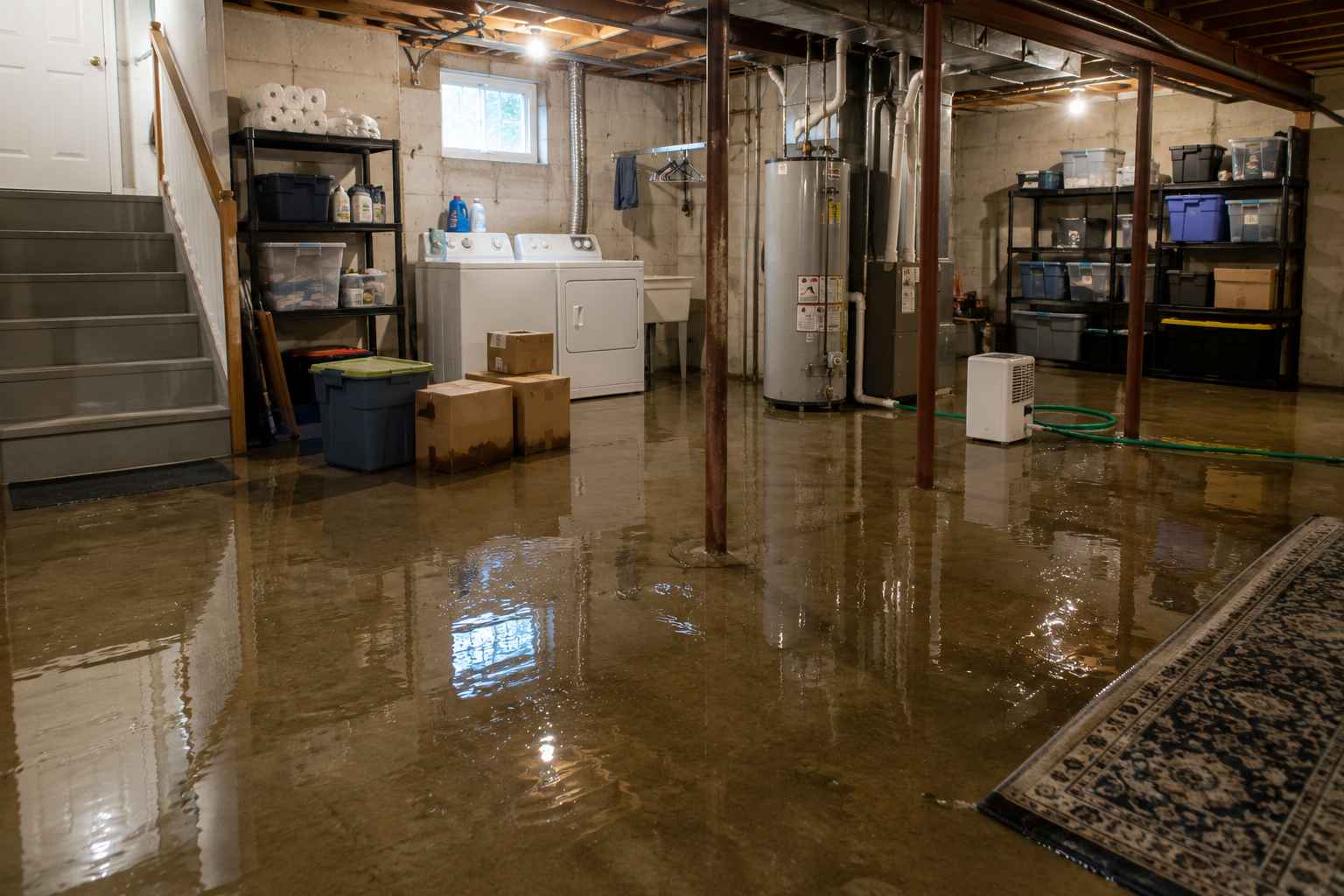
Basement water damage may be covered depending on where the water came from and what caused it. Source: AI-generated image
Two basements can suffer similar water damage but have completely different insurance outcomes. The location of the damage doesn't determine coverage — the source and cause of the water do.
What Water Damage Is Not Covered by Homeowners Insurance?
Standard homeowners insurance generally doesn't cover water damage caused by:
Gradual leaks or repeated seepage that develops over time.
Neglect or unresolved maintenance problems that could reasonably have been prevented.
Normal wear and tear affecting pipes, appliances, roofs, or other components.
Flooding from rising or accumulating surface water.
Sewer or drain backups unless applicable additional coverage has been purchased.
Sump pump failure or overflow unless your policy includes applicable additional coverage.
Some of these risks may be covered through endorsements or separate policies. Always review your policy for specific exclusions, conditions, and available optional coverage.
Not sure whether your homeowners policy protects you from the water damage risks you face? Compare coverage options and find protection that fits your home.
Compare Homeowners Insurance OptionsWater Damage vs. Flood Damage: What's the Difference?
In everyday conversation, people may describe any large amount of water in a home as a "flood." For insurance purposes, however, water damage and flood damage are treated differently.
Standard homeowners insurance may cover qualifying water damage caused by events such as burst pipes or rain entering through damage caused by a covered peril. Flood damage from rising or accumulating surface water is generally excluded and requires separate flood insurance.
| Scenario | Generally Considered |
|---|---|
| A burst pipe floods a room | Water damage |
| Rain enters through a storm-damaged roof | Water damage, depending on the cause |
| A river overflows and enters the home | Flood damage |
| Surface water enters the home after heavy rain | Flood damage |
Does Homeowners Insurance Cover Mold From Water Damage?
Mold coverage often depends on what caused the moisture that allowed the mold to develop.
If mold develops as a direct result of a covered sudden water loss, some costs associated with mold remediation may be covered, depending on the policy, applicable limits, and exclusions.
If mold develops because of a long-term leak, persistent moisture, flooding, or an unresolved maintenance issue, coverage may be limited or unavailable.
Because mold provisions can vary significantly between policies, review the specific terms and any mold-related limits in your homeowners coverage. For a more detailed explanation, see our guide Does Homeowners Insurance Cover Mold?
What Parts of Your Homeowners Policy Cover Water Damage?
A covered water loss can affect more than one part of your homeowners policy.
Dwelling Coverage
Dwelling coverage helps protect the physical structure of the home. If a covered burst pipe damages drywall, flooring, ceilings, cabinets, or other parts of the structure, dwelling coverage may help pay for covered repairs.
Personal Property Coverage
Personal property coverage applies to belongings such as furniture, clothing, electronics, and other insured possessions. If a covered water loss damages those belongings, this part of the policy may help pay to repair or replace them, subject to the applicable limits and settlement terms.
Loss of Use / Additional Living Expenses
Severe water damage can make a house temporarily uninhabitable. When a covered loss forces you to live elsewhere while repairs are completed, loss of use or additional living expense coverage may help with qualifying costs above your normal living expenses, subject to policy limits and terms.
Standard homeowners policies generally include protection for the structure, personal belongings, and additional living expenses associated with covered losses.
How Much Will Homeowners Insurance Pay for Water Damage?
There's no single payout amount for a water damage claim.
The amount can depend on:
- the extent of covered damage;
- your deductible;
- dwelling and personal property coverage limits;
- applicable sublimits;
- how damaged property is valued;
- the terms and exclusions of your policy.
Your deductible is the portion of a covered claim you're generally responsible for before insurance pays. For example, if you have $8,000 in covered water damage and a $1,000 deductible, a simplified calculation would be:
The actual settlement may differ based on the policy and claim.
Personal property can also be settled differently depending on whether the policy provides replacement cost value (RCV) or actual cash value (ACV).
RCV generally reflects the cost to replace covered property with a comparable new item, subject to policy terms. ACV generally accounts for depreciation, which can result in a lower initial or final payment depending on the policy.
Coverage limits still apply regardless of the valuation method.
Does Homeowners Insurance Pay to Fix the Source of Water Damage?
Not necessarily. Homeowners insurance may cover the resulting water damage without paying to repair or replace the item that caused it.
For example, if an old water heater suddenly fails and damages your flooring, drywall, and furniture, the resulting damage may be covered while replacement of the water heater itself may not be.
The same principle can apply to a deteriorated pipe, failed washing machine, worn dishwasher, or old plumbing fixture. Homeowners insurance generally doesn't cover routine maintenance, normal wear and tear, or the replacement of a component simply because it failed.
In short: the damage caused by the water may be covered even when the source of the water isn't.
Can You Add Extra Coverage for Water Damage?
Yes. Some water-related risks that aren't included in a standard homeowners policy may be covered through endorsements or separate insurance.
Options can include:
- Water backup coverage. May provide protection for certain sewer, drain, or sump pump backup losses.
- Sump pump coverage. Depending on the insurer, protection for sump pump overflow or failure may be included within a broader water backup endorsement.
- Equipment breakdown coverage. May cover certain sudden mechanical or electrical breakdowns of home systems and appliances.
- Service line coverage. May help cover qualifying damage to underground utility or service lines for which the homeowner is responsible.
- Flood insurance. Provides separate protection for qualifying flood losses that standard homeowners insurance generally excludes.
These coverages protect against different risks, so having one doesn't necessarily mean you're protected against all sources of water damage.
Standard homeowners insurance doesn't cover every source of water damage. Explore coverage options that can help close the gaps in your protection.
Explore Homeowners Insurance CoverageShould You File a Water Damage Insurance Claim?
Not every instance of water damage necessarily warrants an insurance claim. First, determine whether the cause appears to be covered and estimate the extent of the damage. Then compare the potential covered loss with your deductible.
For example, filing a claim for $1,500 in covered repairs may have limited financial benefit if your deductible is $1,000. A much larger loss may present a very different calculation.
You may also want to consider your recent claims history and review your policy before deciding.
The right decision depends on the circumstances. Rather than assuming you should always file — or never file for a smaller loss — consider the amount of damage, deductible, potential coverage, and your individual insurance situation.
What Should You Do After Water Damage?
Act quickly to limit further damage and preserve evidence of what happened.
- Stop the source of water if it's safe to do so. Shut off the appropriate water supply when possible.
- Prevent further damage. Take reasonable temporary steps to keep the problem from getting worse.
- Document the damage. Take photos and videos before major cleanup or repairs.
- Protect damaged property. Don't dispose of damaged belongings until you've documented them and know whether the insurer needs to inspect them.
- Save receipts. Keep records of emergency services, temporary repairs, and other related expenses.
- Avoid major permanent repairs until the damage has been evaluated unless immediate work is necessary to protect the property.
How to File a Water Damage Insurance Claim
The exact claims process varies by insurer, but it generally includes several steps.
- 1Report the loss
Tell your insurer when you discovered the damage, what happened, and what areas of the home were affected.
- 2Provide documentation
Submit photos, videos, an inventory of damaged belongings, receipts, and any other requested evidence.
- 3Explain the source of the water
Because coverage depends heavily on the cause, provide any available information about the failed pipe, appliance, roof damage, backup, or other source.
- 4Work with the adjuster
The insurer may inspect the property, estimate the damage, and determine which parts of the loss fall within your policy.
- 5Review the coverage decision and estimate
Check what damage is covered, what deductible applies, and whether any limits or exclusions affect the claim.
- 6Keep records throughout the process
Save communications, estimates, invoices, receipts, and other claim-related documents.
What If Your Water Damage Claim Is Denied?
A denied claim doesn't necessarily mean that homeowners insurance never covers your type of water damage. First, ask the insurer for the specific reason for the denial. Then review the relevant section of your policy, including any cited exclusions, limitations, or conditions.
Depending on the situation, you may be able to:
- provide additional photographs or documentation;
- submit repair or plumbing reports;
- clarify when the damage occurred or was discovered;
- ask the insurer about its review or appeal process.
For example, the difference between a sudden plumbing failure and long-term seepage can materially affect whether a loss falls within coverage.
If you don't understand the reason for a coverage decision, ask the insurer or insurance professional to explain which policy provision applies.
How to Prevent Water Damage in Your Home
A few preventive measures can reduce the likelihood or severity of water damage:
- inspect plumbing and repair leaks promptly;
- replace worn appliance hoses;
- maintain your roof, gutters, and downspouts;
- keep adequate heat in the home during freezing weather;
- know where your main water shutoff valve is;
- consider installing water leak detectors;
- maintain sump pumps where applicable.
Regular maintenance can't eliminate every water loss, but it can help prevent gradual damage and reduce the severity of sudden problems.
Get the Right Homeowners Insurance Coverage
Water damage can come from many sources, and standard homeowners insurance doesn't protect against every one of them. Understanding your policy — and whether you need additional protection for risks such as water backup or flooding — can help you avoid unexpected coverage gaps.
51 State Insurance can help you compare homeowners insurance options and find coverage based on your home, location, budget, and insurance needs.
Get a Homeowners Insurance QuoteCoverage availability, limits, deductibles, exclusions, endorsements, and claim decisions vary by insurer, policy, and state. Review your policy documents to understand the coverage that applies to your specific situation.