
Does Car Insurance Cover Windshield Replacement?
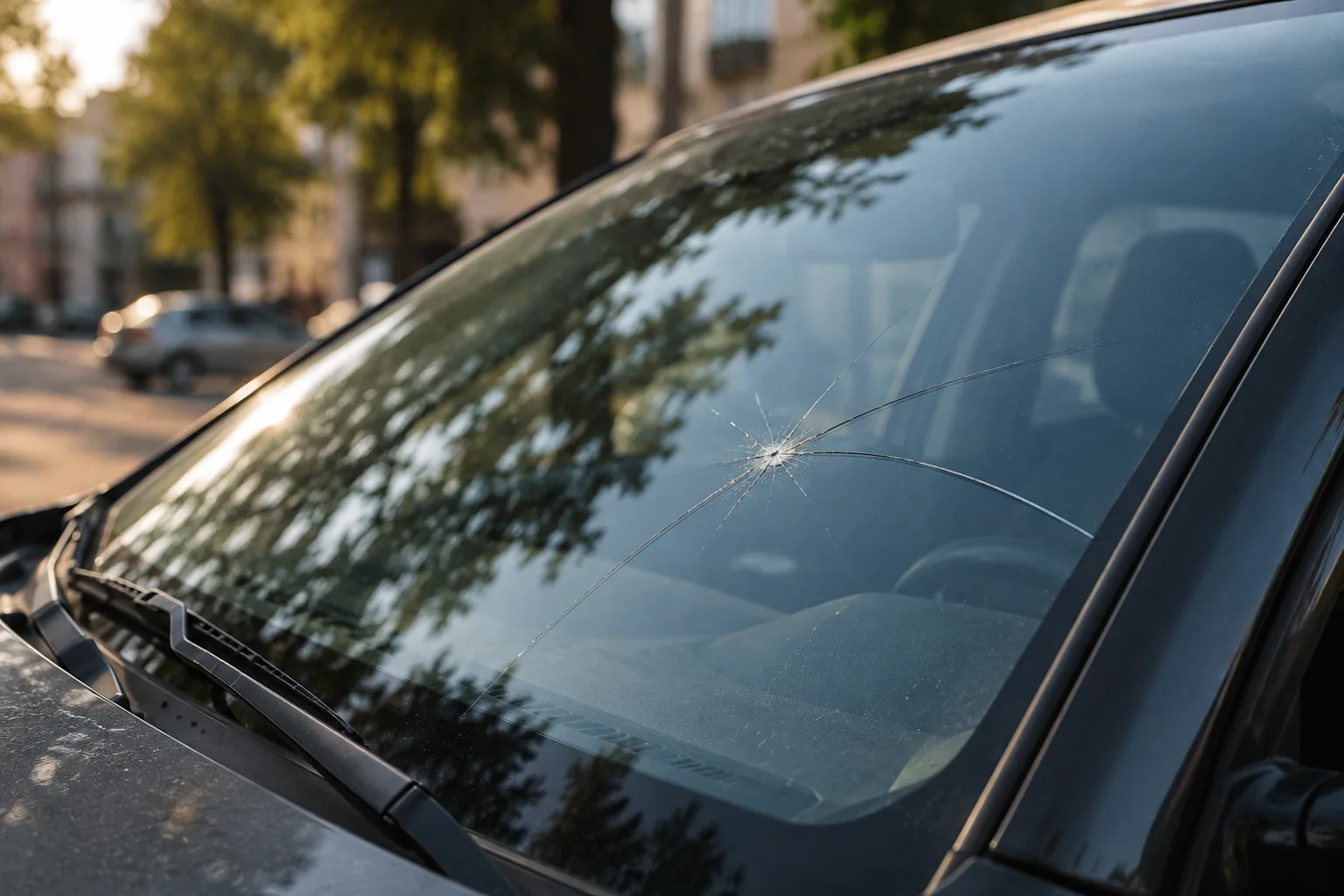
Whether windshield damage is covered generally depends on how it happened and what coverage you carry. Source: AI-generated image
Car insurance may cover windshield repair or replacement, but it depends on how the glass was damaged and what coverage you have.
Non-collision windshield damage may fall under comprehensive coverage, while damage caused by a crash may fall under collision coverage. Liability-only insurance generally does not pay to repair or replace the windshield on your own vehicle.
Even when windshield damage is covered, you may still have out-of-pocket costs. The amount depends on your policy terms, applicable deductible, and any additional glass coverage.
Key Takeaways
- Windshield damage may be covered by comprehensive or collision insurance, depending on what caused it.
- Comprehensive coverage may apply to many types of non-collision windshield damage.
- Liability coverage generally does not pay for damage to your own windshield.
- Your deductible and glass coverage can affect how much you pay out of pocket.
- Some windshield damage can be repaired, while other damage requires full replacement.
What Type of Car Insurance Covers Windshield Damage?
The first thing to check is what coverage you have. Different parts of an auto insurance policy may apply depending on how your windshield was damaged.
| Coverage | When It May Apply | Windshield Coverage |
|---|---|---|
| Comprehensive coverage | Damage caused by events other than a collision | May cover windshield repair or replacement |
| Collision coverage | Damage caused when your vehicle collides with another vehicle or object | May cover the windshield as part of a collision claim |
| Full glass coverage | Policy-specific coverage for auto glass | Terms vary by insurer, policy, and state |
| Full coverage | Common term for a policy combining liability, collision, and comprehensive coverage | Windshield protection depends on the actual coverages included in the policy |
| Liability coverage | Damage or injuries you cause to other people | Generally does not cover damage to your own windshield |
Comprehensive and collision are separate physical damage coverages. They may be optional under state insurance requirements, although a lender or leasing company may require them for a financed or leased vehicle.
“Full coverage” is not one standardized insurance product. It is commonly used to describe a combination of coverages. To determine whether windshield damage is protected, check the individual coverages and terms listed in your policy.
When Does Car Insurance Cover Windshield Replacement?
Whether car insurance covers windshield replacement often starts with one question: What caused the damage?
| Cause of Damage | Coverage That May Apply | Notes |
|---|---|---|
| Rock or road debris | Comprehensive | May apply to a rock chip or crack caused while driving |
| Hail or storm damage | Comprehensive | Weather-related glass damage may be covered |
| Falling tree branch or other object | Comprehensive | May apply when an object falls onto the vehicle |
| Vandalism | Comprehensive | May apply to intentionally damaged glass |
| Theft-related damage | Comprehensive | May apply if the windshield or other glass is damaged during theft or attempted theft |
| Fire | Comprehensive | May apply when the windshield is damaged as part of a covered vehicle fire |
| Animal-related damage | Comprehensive | May apply when contact with an animal damages the glass |
| Vehicle collision | Collision | May apply when windshield damage occurs as part of a covered crash |
The exact coverage depends on the circumstances of the loss and the terms and exclusions of your policy.
If the windshield was damaged in a vehicle fire, see our guide to Does Car Insurance Cover Fire Damage? for more information about comprehensive coverage and fire-related claims.
If broken glass resulted from theft or an attempted theft, our guide to Does Car Insurance Cover Theft? explains how auto insurance may respond to theft-related vehicle damage.
When Is Windshield Replacement Not Covered?
Windshield replacement may not be covered if your policy does not include the type of insurance needed for the loss.
For example, if your windshield is damaged by a non-collision event but your policy does not include comprehensive coverage or applicable glass coverage, you may have to pay for the repair or replacement yourself.
Insurance also generally does not cover routine deterioration, normal wear and tear, or damage that existed before the covered event. Policy exclusions may also apply depending on how the damage occurred, so it is important to review the specific terms of your policy.
There is an important difference between damage being excluded from coverage and a covered claim resulting in no insurance payment. A covered loss may still produce no insurer payment if the applicable deductible is equal to or greater than the repair or replacement cost. We explain how deductibles affect windshield claims below.
Not sure whether your auto insurance provides the coverage you need? Compare your options and find a policy that fits your situation.
Does Car Insurance Cover Windshield Repair?
Car insurance may also cover windshield repair, depending on the cause of the damage and your policy.
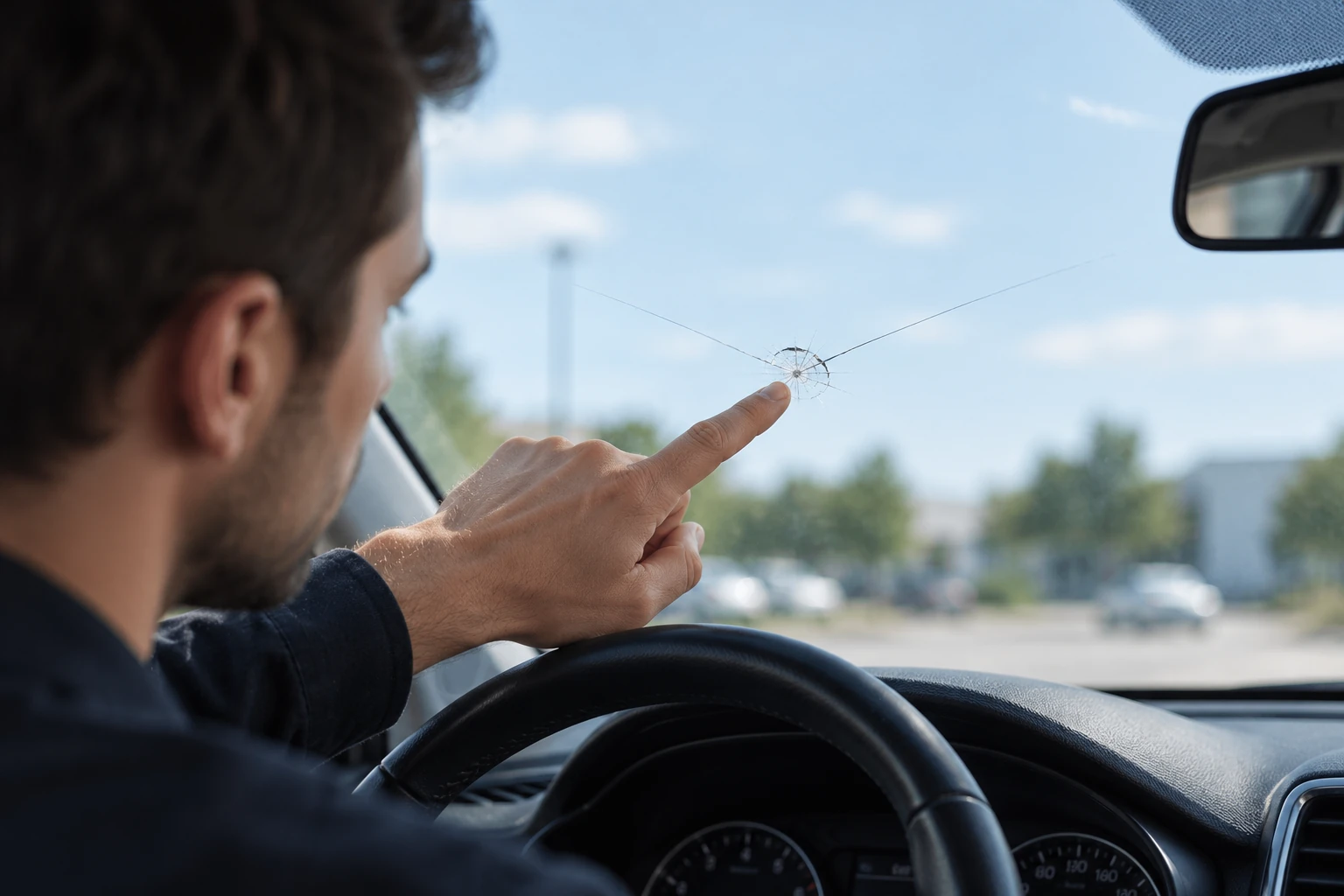
A small windshield chip may be repairable depending on its size, depth, and location. Source: AI-generated image
Not every chip or crack requires a full windshield replacement. A qualified auto glass specialist may consider several factors when determining whether repair is appropriate, including:
- the size and depth of the chip or crack;
- the location of the damage;
- whether the damage reaches the edge of the windshield;
- whether it interferes with the driver’s line of sight;
- whether there are multiple chips or cracks;
- the overall condition of the glass.
For example, a small, limited chip may sometimes be repairable, while a longer or deeper crack, edge damage, or multiple damaged areas may require replacement.
These should not be treated as universal repair rules. The appropriate option depends on the windshield, the type and location of the damage, and an assessment by a qualified auto glass professional.
How Do ADAS Cameras and Sensors Affect Windshield Replacement?
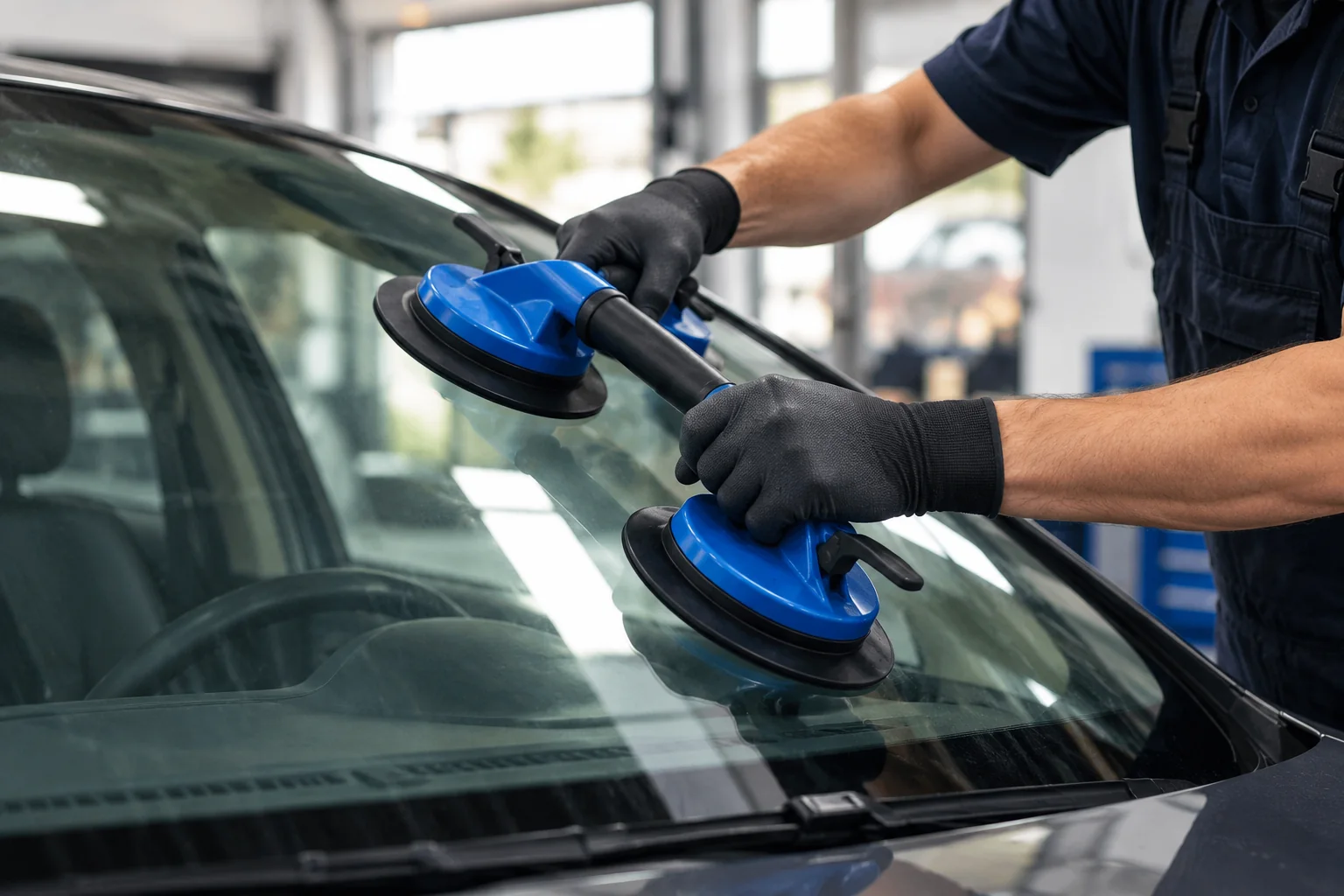
Windshield replacement may require additional work when the vehicle is equipped with cameras or sensors. Source: AI-generated image
Many newer vehicles use windshield-mounted cameras and sensors as part of advanced driver assistance systems (ADAS). After windshield replacement, these systems may require recalibration according to the vehicle manufacturer’s procedures.
Recalibration can add extra work and cost to the replacement. Whether it is required depends on the vehicle, its technology, and the type of work performed.
How Much Will Insurance Pay for Windshield Replacement?
How much your insurance company pays depends on several factors, including the covered replacement cost, applicable deductible, policy terms, and any special glass provisions.
For example, suppose a covered windshield replacement costs $700 and your applicable deductible is $500. You would generally be responsible for the first $500, while the insurer’s potential payment would be based on the remaining covered amount.
If the covered replacement costs $400 and the applicable deductible is $500, the insurer may make no payment because the cost does not exceed the deductible.
Different terms may apply if your policy includes special glass coverage.
How Does a Windshield Deductible Work?
A deductible is the amount you are responsible for paying toward a covered loss before your insurance company pays its share.
Comprehensive and collision coverage commonly include deductibles. Which deductible applies to windshield damage depends on the cause of the loss and the terms of your policy.
Some policies may also have a separate glass deductible. Always check your declarations page and policy terms instead of assuming your standard comprehensive deductible applies to every windshield claim.
What Is Full Glass Coverage?
Full glass coverage is an insurance option or policy provision specifically designed for vehicle glass.
Depending on the insurer, policy, and state, it may cover eligible glass repair or replacement with a lower deductible or no deductible. It may also apply to other vehicle glass, such as side or rear windows, depending on the policy.
Availability and terms vary. Having comprehensive insurance does not automatically mean you have full glass coverage or that every windshield replacement will be free.
Can Windshield Repair Be Covered Without a Deductible?
In some cases, yes.
Certain insurance companies or policies may provide special terms for windshield repair, including a reduced or waived deductible. The goal may be to make repair of eligible damage practical before a larger replacement becomes necessary.
However, there is no universal rule that windshield repair is always covered without a deductible. Check your policy or contact your insurance agent or carrier before scheduling the work.
Are There States With Special Windshield Insurance Rules?
Yes. Windshield insurance requirements and available coverage options can vary by state, particularly when it comes to glass deductibles.
For example, some states have laws affecting whether a deductible can be applied to certain covered windshield or safety-glass claims. Other states may require insurers to offer particular glass coverage options rather than automatically providing zero-deductible coverage.
Because these rules differ and can change, drivers should check current requirements in their state as well as the terms of their own policy.
For drivers in states where 51 State Insurance operates, state-specific insurance requirements are especially important when comparing coverage options. A policy that works one way in Florida, for example, may not offer identical glass terms in another state.
Auto insurance coverage and available options can vary by policy and state. Compare coverage options available to you with 51 State Insurance.
Should You File an Insurance Claim for Windshield Replacement?
A windshield claim is not automatically the best financial choice in every situation. Before filing, it helps to work through a few practical steps.
- 1Get an estimate for the damage.
Find out whether the windshield can be repaired or requires replacement and how much the work is expected to cost.
- 2Check your applicable coverage.
Confirm which part of your policy may apply to the damage and whether you have any special glass provisions.
- 3Compare the cost with your deductible.
If the replacement cost is below or only slightly above your deductible, filing a claim may result in little or no insurance payment.
- 4Consider any special glass terms.
A separate glass deductible or full glass coverage can significantly change your out-of-pocket cost.
- 5Review your claims history and ask questions before filing.
If you are unsure how a windshield claim would be handled, contact your insurer or agent before making a decision.
Filing a claim for windshield repair or replacement may affect your insurance costs in the future. The impact can depend on the insurer, state, type of claim, circumstances of the loss, and your previous claims history. A windshield claim does not automatically mean your premium will increase, but it is worth considering the potential impact before filing.
What If Another Driver Damaged Your Windshield?
If another driver causes an accident that damages your windshield, their property damage liability coverage may apply to the damage to your vehicle.
For example, if another driver is responsible for a collision and the impact cracks or shatters your windshield, the glass damage may be included as part of the property damage claim against the at-fault driver’s insurance.
How the claim is handled can depend on fault, available coverage, state insurance rules, and the circumstances of the accident. In some situations, a driver may instead use applicable coverage under their own policy and allow the insurers to address responsibility afterward.
How to File a Windshield Insurance Claim
If you decide to file a windshield insurance claim, the process will generally involve the following steps:
- Review your policy. Confirm that you have coverage that may apply to the loss.
- Document the damage. Take clear photos of the chip, crack, or shattered glass and record when and how the damage occurred.
- Contact your insurer or insurance agent. Report the damage and provide the requested information.
- Follow the claim instructions. Your insurer may request an estimate, inspection, or additional documentation.
- Arrange repair or replacement. Use a qualified auto glass provider and determine whether your vehicle requires ADAS calibration.
- Keep your records. Save the claim number, estimates, invoices, and related correspondence until the claim is complete.
The exact process varies by insurance company and claim.
How to Help Prevent Windshield Damage
Not every windshield chip or crack can be prevented, but a few habits may reduce the risk.
Keep additional distance behind trucks and other vehicles that may throw road debris. Slow down on gravel roads and around construction zones, where loose stones may be more common.
When possible, avoid parking beneath damaged trees or in locations where falling objects may pose a risk. Keep windshield wipers in good condition, since worn or damaged blades can reduce visibility and may scratch the glass.
Finally, have small chips inspected before they spread. When damage is suitable for repair, addressing it early may help avoid a larger crack and the need for full windshield replacement.
Looking for auto insurance that matches your coverage needs? Compare available options and get a quote with 51 State Insurance.
FAQ
It may. Depending on the policy and cause of the damage, comprehensive or separate glass coverage may apply to side windows, rear windows, and other covered vehicle glass. Check your policy for the types of glass included and any applicable deductible.
Possibly, but OEM glass is not automatically covered under every auto insurance policy. Whether an insurer pays for an original manufacturer windshield can depend on the policy language, vehicle requirements, applicable state rules, and available replacement options.
It may. Coverage can depend on your personal auto policy, the rental agreement, the cause of the damage, and any additional protection purchased from the rental company.
See our guide to Does Car Insurance Cover Rental Cars? for a more detailed explanation of how personal auto insurance may apply to rental vehicles.
Applicable comprehensive or glass coverage can protect a leased or financed vehicle. Lenders and leasing companies may also require certain physical damage coverages while they have a financial interest in the vehicle.
Drivers should check both their insurance policy and any requirements in their finance or lease agreement.
In many situations, drivers may have options when selecting an auto glass provider, although the exact rules can vary by state and insurer.
An insurance company may recommend or maintain a preferred repair network. Before scheduling the work, ask whether choosing a provider outside that network affects the claim process, payment arrangements, or any applicable warranty.
Insurance may cover the underlying windshield damage when the loss falls within your policy, but reimbursement for aftermarket tint or other modifications can depend on policy terms.
State laws also regulate windshield tinting, so a replacement must comply with applicable requirements.
It can. The fact that a vehicle was parked does not by itself determine whether the windshield damage is covered.
The cause of the damage and the coverage included in the policy are generally more important. For example, certain non-collision events may fall within comprehensive coverage.
A warranty on replacement glass, installation, or calibration is generally provided by the auto glass shop or service provider rather than automatically by the auto insurance policy.
Before approving the work, ask the provider what warranty applies and what it covers.